Maith Conveyor
1 / 5


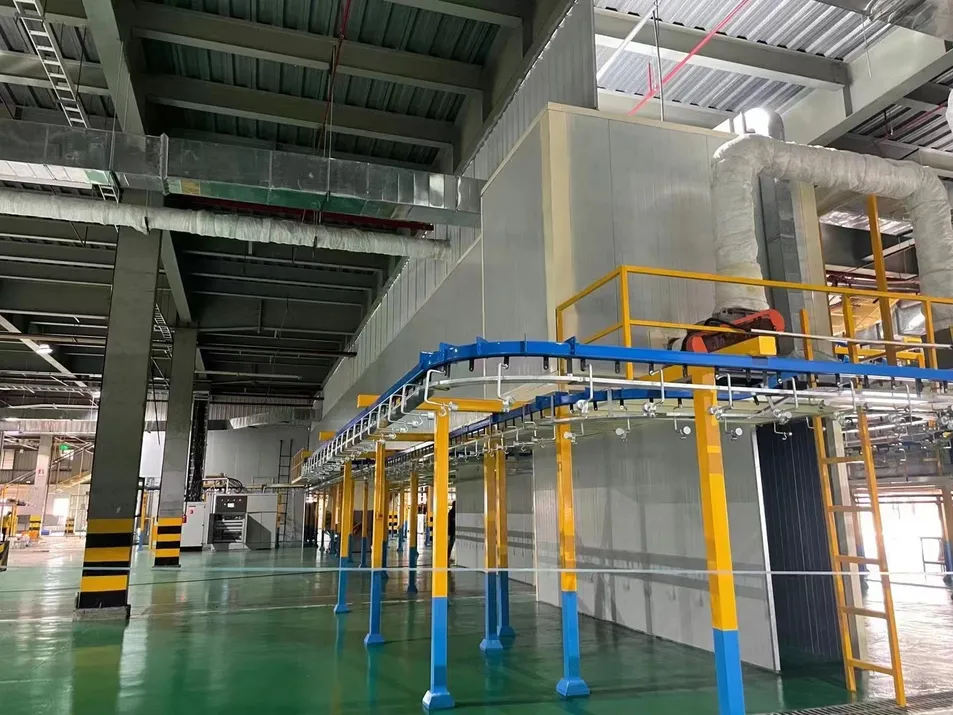
An ordinary overhead conveyor is composed of a traction chain, carriages, spreaders, an aerial guide rail, a driving device, a tensioning device, and safety devices, etc. Different traction chains have different pitch sizes, and their single-hanging load-bearing capacities also vary. This overhead conveyor features a simple structure and strong stability, and it can make arbitrary turns in both horizontal and vertical planes. It is widely used in medium and small-scale painting lines.

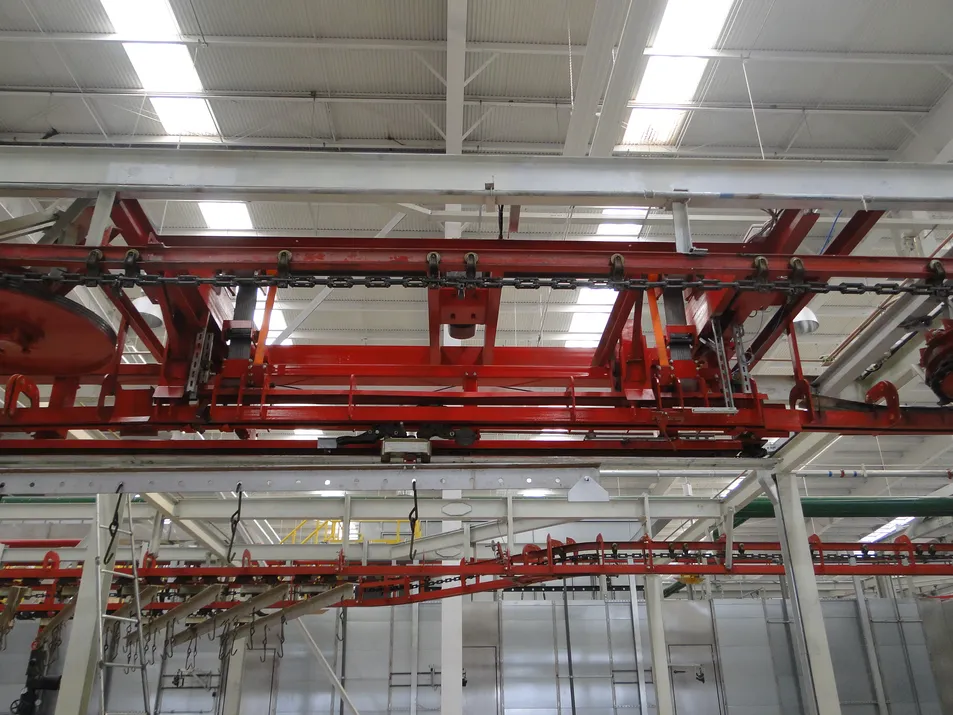
The accumulating overhead conveyor is equipped with a double-layer guide rail, where the upper layer is the traction track and the lower layer is the load track. The traction chain runs along the traction track, and the load trolley moves forward along the load track by being pushed by the push hooks or push rods on the traction chain.
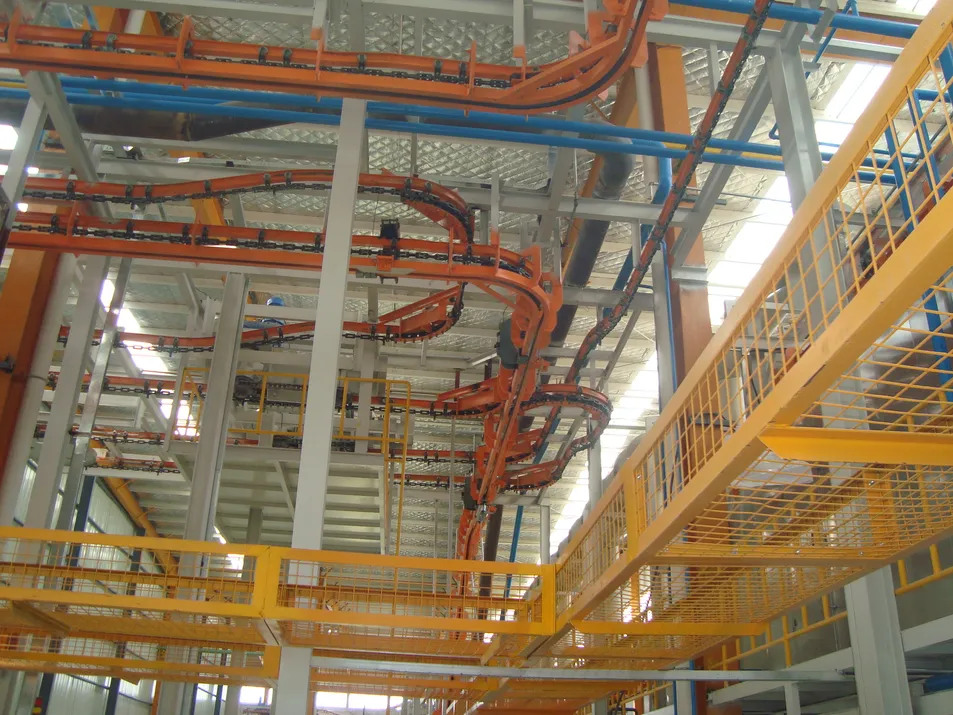
The pendulum conveyor is primarily used in the pretreatment and electrophoresis lines of large-scale painting lines. It eliminates pollution to the workpiece surface and the tank liquid. The angle of entering and exiting the tank is 45°, which reduces the length of the tank body. It can be used in conjunction with skids fixed on the support rods of the U-shaped pendulum.
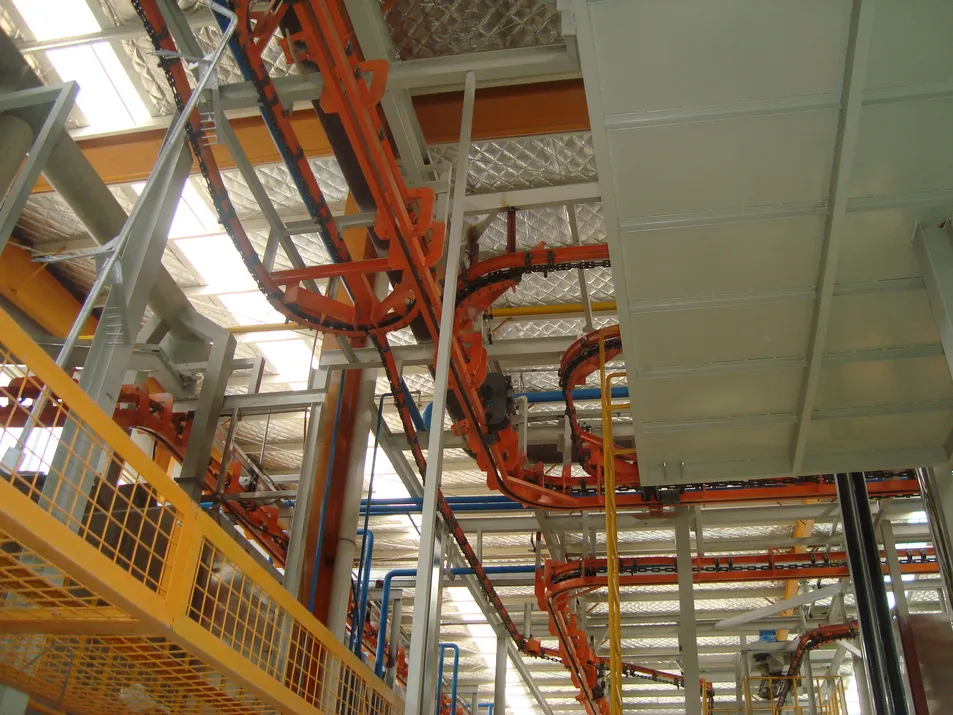
This conveyor can make the vehicle body rotate 180° when entering the tank, with the bottom of the vehicle body facing upward and the tail moving forward in reverse, and then rotate 180° again when exiting the tank. The guide rail and the load-bearing traction chain are in a straight line with locking mechanisms installed.
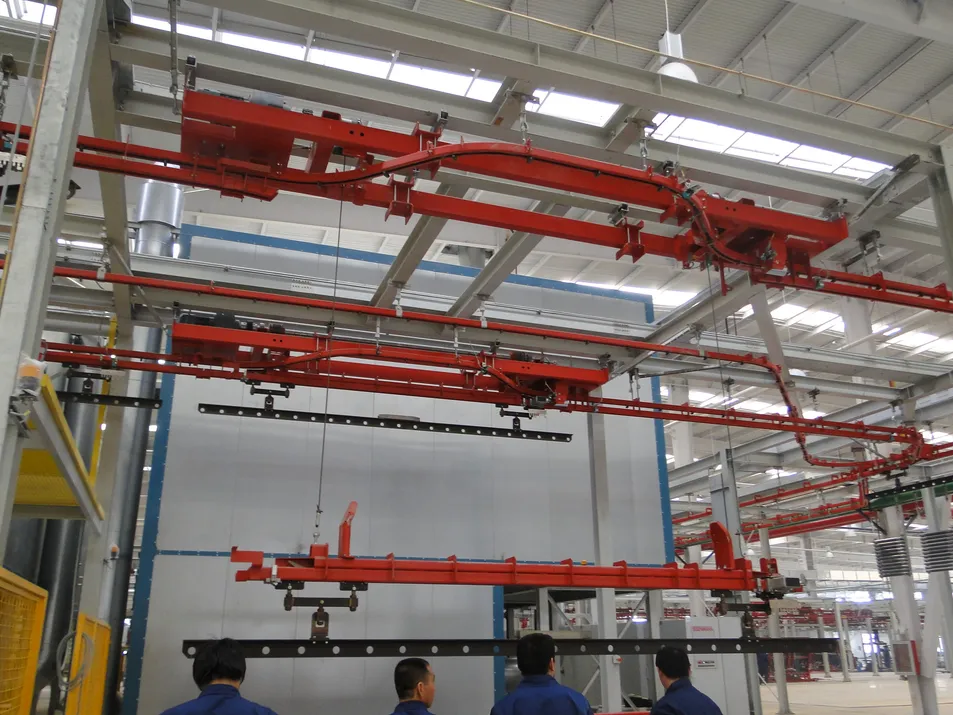
The self-propelled hoist conveying system is a highly automated aerial conveying equipment. It consists of rails, power supply sliding wires, current collectors, trolleys, electric chain hoists, turnouts, and advanced electric control systems.
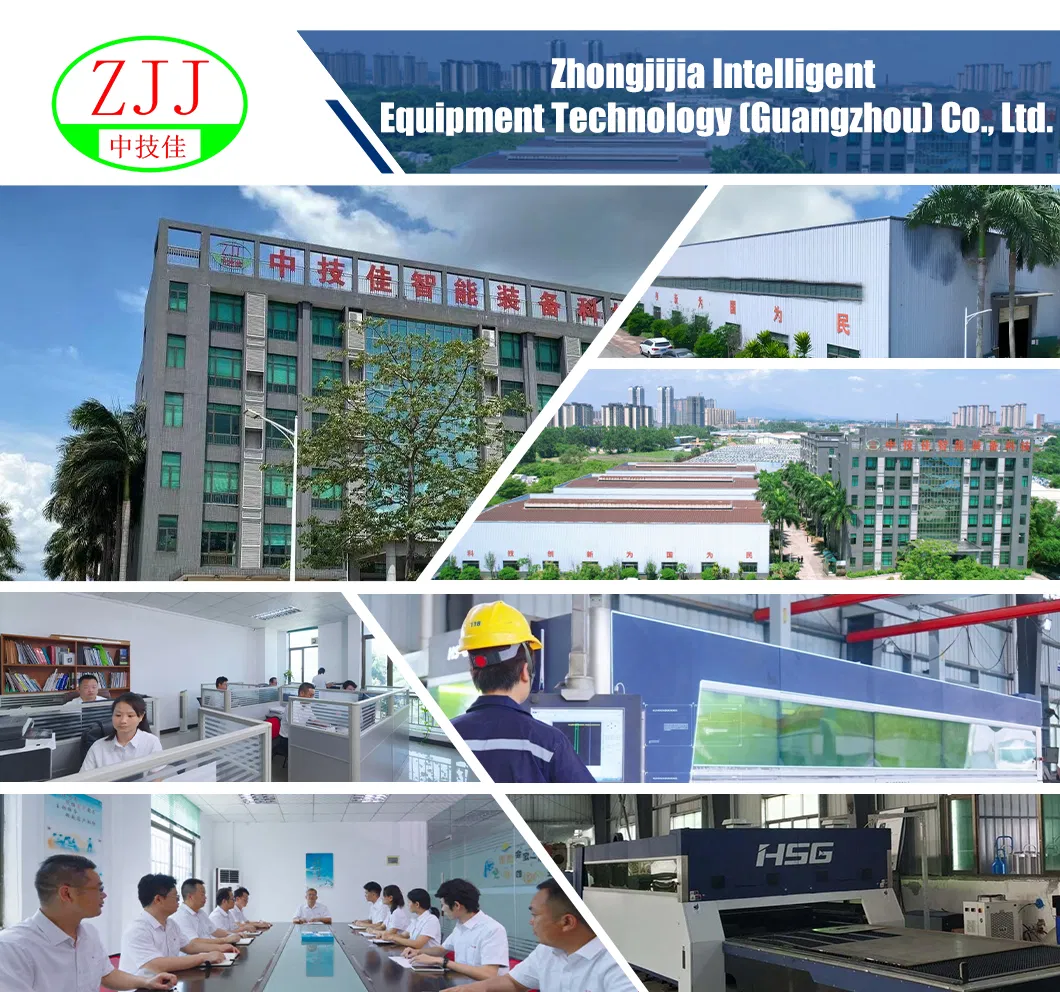
Specializing in providing comprehensive solutions for industrial non-standard equipment, including whole-plant planning, design, fabrication, installation, after-sales maintenance, and technical training. Solutions cover plastic and metal surface treatment, spray painting lines, electrophoresis lines, assembly lines, and drying lines.