China’s top conveyor manufacturers are helping warehouses move goods with greater speed, accuracy, and control. Yet equipment alone does not create an efficient operation. The real improvement comes from matching conveyor design with storage locations, order patterns, labor skills, and safety requirements.
This guide explains how to optimize warehouse workflow with conveyors through practical planning and measurable decisions. A reliable project begins with observing the current process. Track travel distance, picking time, carton size, pallet weight, and daily order peaks. For example, a roller conveyor may move cartons from a picking zone to packing stations, while a belt conveyor handles small, unstable parcels. Clear transfer points reduce waiting near scanners and packing benches.
Experienced suppliers should provide layout drawings, load calculations, speed recommendations, and maintenance guidance. Ask how motors, sensors, emergency stops, and replacement parts will be supported after installation. A low purchase price can become expensive when downtime interrupts dispatch schedules. Safety must remain visible, with guarded pinch points, accessible controls, and clear operator training.
No layout is perfect. The first estimate may be wrong. Products change, and seasonal demand can expose weak planning. For that reason, test a small conveyor section before expanding the entire system. Measure throughput, misroutes, noise, and operator feedback. Review the data with warehouse staff, not only designers. China’s conveyor expertise can offer flexible customization, but dependable results still require accurate site information, honest communication, and disciplined follow-up. An optimized workflow should feel simple on a busy shift: cartons arrive steadily, workers avoid unnecessary walking, and every movement can be traced and improved.
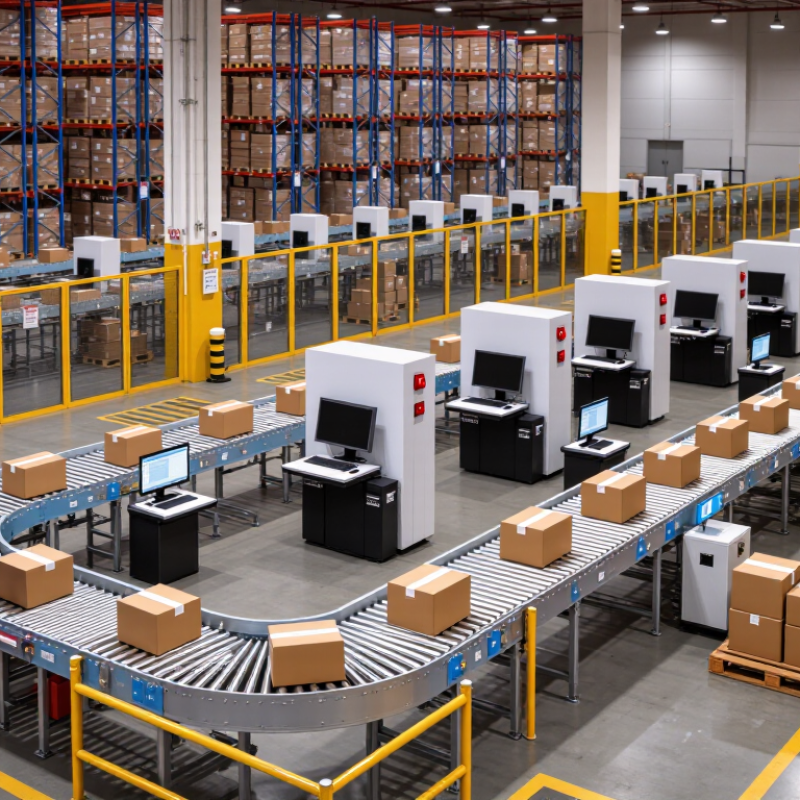
Warehouse conveyors are mechanical systems that move cartons, totes, pallets, or parcels between warehouse zones. They may use belts, rollers, chains, or gravity. A well-designed line connects receiving, storage, picking, packing, and dispatch with fewer manual transfers. That reduces walking, handling, and avoidable product damage. A carton should move steadily, not wait beside a full roller bed.
Their value is measurable. The 2024 MHI Annual Industry Report found that 43% of supply chain professionals already use robotics and automation. This figure shows growing confidence in automated material movement. Conveyors can also improve order consistency by controlling speed and routing. Sensors can detect gaps, stops, and accumulation before a small delay becomes a packing-area backlog. However, throughput depends on the entire process, not the conveyor alone.
Poor planning creates expensive problems. A narrow aisle, weak barcode placement, or badly positioned merge can cause repeated stoppages. In warehouse assessments, operators often discover that a simple gravity section would suit low-volume returns better than a powered line. That is easy to overlook. Staff still need clear emergency stops, guarded pinch points, safe crossings, and practical maintenance access. MHI’s report also identifies labor availability as a continuing operational concern, so conveyor design should support workers rather than merely replace movement. A useful test is simple: follow one carton from unloading to dispatch, and record every unnecessary pause.
Begin with direct observation, not software reports. Walk receiving, picking, replenishment, and dispatch routes. Record waiting time, travel distance, queues, and repeated handling.
Track cartons from the receiving dock to storage, picking, packing, and loading. Mark every handoff, scan, turn, and waiting point. A simple floor map can reveal blocked aisles.
Workflow problems often appear during volume peaks. Compare movement, queues, and delays across both periods. A carton may wait twelve minutes beside a packing station.
Measure orders per hour, travel distance, picking accuracy, and conveyor utilization. Also record queue length and handling frequency. Basic data prevents expensive guesses.
Map the full route before selecting equipment. Connect scanner confirmations with storage entry and picking exits. Divert points should match carton sizes and order zones.
Small buffer lanes can support packing stations during afternoon peaks. They absorb short surges without stopping the main line. Keep access clear.
No. Irregular products may need careful manual handling. Forcing damaged labels or mixed cartons onto fixed routes can slow everything. Automation is not always better.
Check for carton jams, loose belts, blocked sensors, repeated scans, and crowded accumulation zones. Watch whether workers walk around the conveyor. Our first layout may be wrong.
Ask where materials stop, turn, or wait. Staff often know practical shortcuts that reports miss. Their answers may challenge the original design.
Reserve room for maintenance, safe spacing, and future volume growth. A faster line can create congestion at the next station. Review the process again.
Warehouse conveyors are essential tools for improving the speed, consistency, and visibility of material movement. To understand how to optimize warehouse workflow with conveyors, begin by evaluating current storage locations, travel distances, order volumes, product sizes, and common bottlenecks. This assessment helps determine whether a belt, roller, chain, or flexible conveyor is most suitable for receiving, storage, picking, packing, and shipping operations.
An effective system should connect naturally with racks, workstations, sorting areas, and order-processing technology while allowing sufficient flexibility for future growth. Performance can be improved through balanced conveyor speeds, well-planned transfer points, clear operating procedures, and real-time monitoring. Regular inspections, cleaning, lubrication, and prompt replacement of worn components help maintain reliability and reduce downtime. Safety should remain a priority through guarding, emergency stops, proper training, and unobstructed walkways. By combining thoughtful planning, suitable equipment, and continuous improvement, warehouses can increase throughput, reduce unnecessary handling, and create a more organized workflow.

 Maith Conveyor