China’s top warehouse conveyor systems are designed to move cartons, totes, pallets, and parcels with controlled speed and consistent timing. They connect receiving docks, storage zones, picking stations, packing areas, and shipping lanes. The exact design depends on product weight, warehouse size, order volume, and available floor space.
So, how does a warehouse conveyor system work? Sensors detect an item as it enters the line. A control system then identifies its destination and activates motors, rollers, belts, or chains. Diverters and transfers guide the item toward the correct workstation. For example, a carton may travel along a powered roller conveyor, pause at a scanning point, and then move toward packing. Operators can monitor speed, motor status, and accumulated orders through warehouse software.
A reliable system needs more than strong machinery. It requires accurate layout planning, suitable conveyor types, guarded moving parts, emergency stops, and regular maintenance. Engineers usually test load limits, noise levels, stopping distances, and barcode accuracy before full operation. Small details matter. A poorly aligned roller can damage cartons or create repeated delays. In real warehouses, dust, uneven loading, and changing product sizes can expose weaknesses that design drawings miss. That is why experienced suppliers often recommend pilot testing and gradual adjustments. Performance should be measured through throughput, error rates, downtime, and worker feedback. No system is perfect. Careful review keeps improvements practical, safe, and measurable.
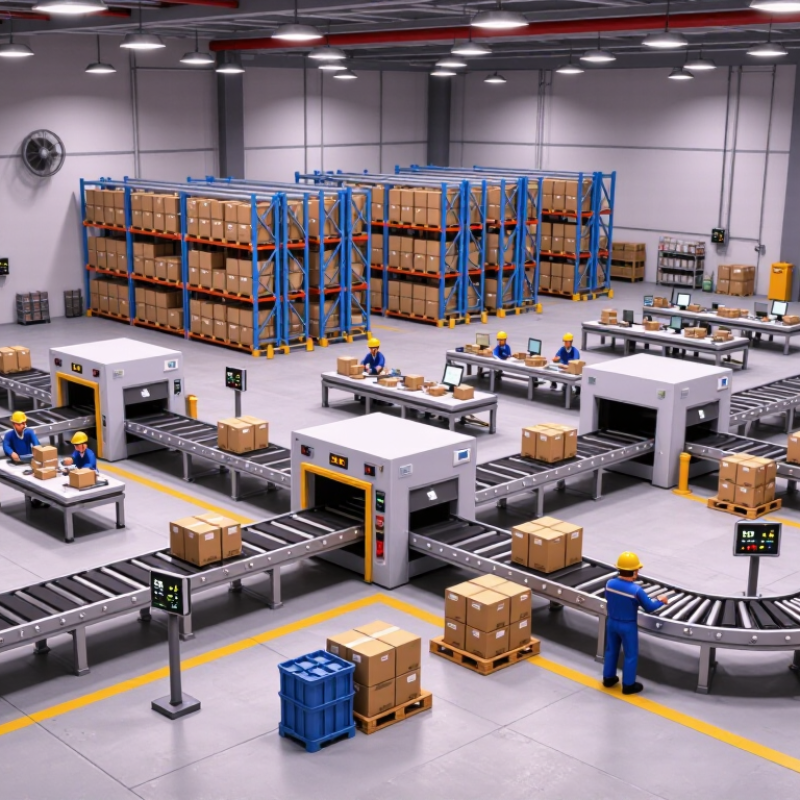
China’s top warehouse conveyor systems are usually selected by load, speed, and order profile. Belt conveyors handle cartons, polybags, and irregular packages with stable movement. Roller conveyors suit rigid cartons and pallet loads. Flexible roller sections can also support temporary packing areas, though they may need more manual adjustment.
Sortation conveyors are important in high-volume fulfillment centers. They use barcode scanners, sensors, and diverters to route parcels toward different chutes. The State Post Bureau of China reported 175.09 billion express parcels in 2024, a 21.5% increase from the previous year. That volume explains the demand for faster, more controlled material flow. Yet speed alone is not the answer. A badly tuned sorter creates jams, noise, and expensive downtime.
Vertical conveyors save floor space between mezzanines and storage levels. Pallet conveyors move heavier goods, while powered roller systems support accumulation before picking or dispatch. The 2024 MHI Annual Industry Report surveyed more than 1,000 supply-chain professionals and identified automation as a leading investment priority. In practice, reliable systems need emergency stops, guarded transfer points, clear maintenance access, and software that records faults. I would not choose the most complex design automatically. Dust, uneven cartons, and changing order sizes can expose weaknesses quickly. Start with measured flow data. Then test the system during peak conditions.
A warehouse conveyor system moves cartons through coordinated mechanical and digital components. The frame supports the route, while belts or rollers carry each carton. A motor and gearbox provide controlled power. Drive pulleys transfer motion across the conveyor. Tail pulleys keep belt tension stable. Bearings reduce friction at rotating points.
Sensors detect carton position, size, and movement. A programmable logic controller then adjusts speed or activates a diverter. Barcode or vision devices can direct cartons toward different packing areas.
Emergency-stop switches, guarding, and warning signals protect workers near moving parts. ANSI/ASME B20.1 provides widely used safety guidance for conveyor design.
MHI’s 2024 Annual Industry Report reported robotics and automation adoption among 46% of surveyed supply-chain organizations. That figure suggests growing demand, but automation alone cannot repair poor layout.
Tips: Keep sensors clean. Check belt tracking weekly. Leave access around motors and control panels. Test emergency stops during planned maintenance, not during a crisis.
In practical installations, rollers may handle rigid cartons, while belts support soft packages or unstable loads. Transfer sections need precise spacing and level alignment. Small height differences can create jams, noise, or damaged labels.
The control system should also record stoppages and motor faults. This creates useful evidence for maintenance decisions.
A perfectly balanced conveyor line is rarely perfect in real warehouses. Temperature, dust, packaging changes, and rushed loading still matter. Operators should review these conditions before adding more equipment.
Warehouse conveyors move cartons through controlled zones. Belts carry soft parcels, while powered rollers handle rigid boxes. Each motor adjusts speed according to spacing, weight, and destination. Photoelectric sensors detect every carton. A barcode scanner then reads its route information.
The warehouse control system compares that code with the assigned order. It signals a diverter, pop-up wheel, or angled roller section. The carton leaves the main line without stopping nearby goods. Accumulation zones create safe gaps before packing or dispatch. This matters during peak hours. Interact Analysis reported that the global warehouse automation market could exceed US$50 billion by 2027. That forecast reflects rising demand for faster, more traceable material flow.
Practical performance depends on layout, maintenance, and data quality. A dusty sensor can misread a dark carton. Poorly tuned acceleration can damage fragile contents. MHI’s 2024 Annual Industry Report found that 67% of supply chain leaders viewed technology adoption as important for future competitiveness. Conveyors provide speed, but they do not solve every process problem. Operators still need to inspect belt tension, roller wear, emergency stops, and scan accuracy. Human judgment remains necessary. Sometimes, a simpler line performs better.
| Conveyor System or Function | How It Moves Goods | Typical Speed Range | Typical Load or Throughput | Sorting and Control Method | Common Warehouse Use |
|---|---|---|---|---|---|
| Belt Conveyor | One or more motor-driven pulleys rotate a continuous belt. The belt carries cartons, totes, parcels, or bags along a fixed route. | 0.3–2.5 m/s | Approximately 30–150 kg per meter of conveyor; throughput depends on product spacing and belt width. | Variable-speed drives, photoelectric sensors, barcode scanners, and programmable controls regulate flow. | Carton transport, packing lines, order consolidation, and long-distance horizontal movement. |
| Gravity Roller Conveyor | Goods roll down a slightly inclined frame or are pushed manually. Rollers rotate from the weight and movement of the load. | Manual or gravity-driven | Often suitable for cartons and totes weighing about 5–100 kg, subject to roller spacing and frame capacity. | Usually uses manual lane control, brakes, stops, side guides, or mechanical diverters rather than powered sorting. | Loading and unloading zones, accumulation areas, shipping lanes, and short-distance transfers. |
| Powered Roller Conveyor | Motors drive rollers directly or through chains, belts, or line shafts. Individual zones can start, stop, or accumulate loads. | 0.2–1.5 m/s | Commonly handles about 25–250 kg per load, depending on roller diameter, spacing, and drive configuration. | Zero-pressure accumulation uses sensors and zone controllers to maintain product gaps and reduce contact. | Case transport, pallet handling, accumulation, transfers, and automated storage interfaces. |
| Flexible Conveyor | A powered or gravity conveyor expands, contracts, and bends to reach temporary loading or unloading points. | 0.1–0.6 m/s | Typically used for lightweight cartons, parcels, and totes up to approximately 50 kg per load. | Basic start/stop controls, adjustable speed controls, and operator-managed routing are common. | Vehicle loading, trailer unloading, temporary workstations, and changing warehouse layouts. |
| Slat Conveyor | Linked slats form a continuous chain-supported surface that moves products through straight or controlled curved sections. | 0.1–1.0 m/s | Suitable for stable loads, containers, and products that require a firm conveying surface. | Stops, sensors, indexing controls, and mechanical or pneumatic transfer units can position products accurately. | Container handling, case packing, inspection, assembly, and controlled product positioning. |
| Vertical Conveyor | A platform, belt, chain, or reciprocating carrier raises or lowers goods between warehouse levels. | 0.1–0.5 m/s | Common rated capacities range from about 100 kg to more than 2,000 kg, depending on the equipment type. | Interlocked doors, position sensors, emergency stops, and level controls manage safe vertical transfers. | Mezzanines, multi-level picking areas, replenishment routes, and floor-to-floor carton movement. |
| Spiral Conveyor | A continuous belt or slat surface follows a spiral path to move goods vertically while using less floor space than a straight incline. | 0.2–0.8 m/s | Capacity varies by belt width, product dimensions, incline, and allowable load per meter. | Photoelectric sensors and variable-speed controls coordinate entry, discharge, and product spacing. | Continuous elevation changes between floors or process stages where space is limited. |
| Cross-Belt Sorter | Individual carrier carts travel on a closed loop. A small belt on each cart moves the item sideways into the assigned destination chute. | 1.5–3.0 m/s | Often achieves approximately 5,000–15,000 items per hour, depending on item size, induction rate, and chute layout. | Barcode or dimension data is matched with a destination in the warehouse control system; the carrier discharges at the assigned chute. | High-volume parcel, e-commerce, apparel, and small-item order sorting. |
| Sliding-Shoe Sorter | Load carriers move along a track while sliding shoes push cartons or parcels laterally onto the correct takeaway lane. | 1.5–2.5 m/s | Common throughput is approximately 4,000–12,000 items per hour, influenced by item dimensions and induction spacing. | Scanners identify each item, and electronically controlled shoes activate at the assigned discharge point. | Carton, parcel, and tote sorting where accurate, high-speed diverting is required. |
| Wheel Diverter | Powered wheels rise between conveyor rollers and turn or divert a load onto a branch conveyor at a selected angle. | 0.3–1.5 m/s | Generally handles cartons and totes from approximately 5–100 kg, depending on the wheel arrangement. | Photoelectric sensors, barcode readers, and programmable logic controllers determine the divert direction. | Case routing, order consolidation, lane separation, and moderate-speed carton sorting. |
| Pop-Up Transfer | A belt, roller, or chain module lifts above the main conveyor surface and moves goods at a 90-degree angle. | 0.2–1.0 m/s | Suitable for totes, cartons, and pallets within the rated capacity of the lifting and transfer module. | Position sensors confirm load arrival; the control system raises the module, transfers the load, and lowers it afterward. | Right-angle transfers, merging lines, pallet handling, and compact layout changes. |
| Merging and Induction | Loads from multiple conveyor lines are combined into one controlled stream before storage, picking, or sorting. | 0.3–2.0 m/s | Throughput is determined by line speed, product spacing, merge logic, and the capacity of the downstream process. | Gap control, accumulation zones, sensors, scanners, and sequencing software create a consistent item flow. | Order picking, automated storage retrieval, parcel induction, and sorter feeding. |
| Sensors and Identification | Photoelectric, proximity, dimensioning, weighing, and barcode or RFID devices collect information as goods pass conveyor points. | Real-time detection | Performance depends on sensor response time, scan rate, item presentation, and network communication. | Warehouse control software uses item ID, destination, weight, dimensions, and conveyor location to issue routing commands. | Tracking, inventory visibility, automated sorting, exception handling, and shipment verification. |
| Safety and System Control | Motors, drives, controllers, safety circuits, guarding, emergency stops, and interlocks coordinate conveyor movement. | Configured for each zone | System capacity must remain within the rated load, motor duty cycle, accumulation pressure, and structural limits. | Programmable logic controllers and warehouse control systems manage start/stop sequences, alarms, routing, and fault recovery. | All automated conveyor applications, particularly areas with operators, elevated equipment, or multiple transfer points. |
Choosing a conveyor depends on the warehouse task, product shape, and movement speed.
Belt conveyors suit cartons, parcels, and uneven packages. A motor turns pulleys beneath the belt, creating steady movement with limited manual handling.
They work well in packing areas where operators need a stable surface.
However, belts can collect dust and require regular cleaning.
Roller conveyors fit rigid cartons and totes with flat bottoms. Gravity rollers move goods down gentle slopes, while powered rollers control speed and spacing.
They are useful in receiving zones, storage aisles, and dispatch lanes.
For heavier loads, chain conveyors provide stronger traction.
They are less suitable for fragile products because contact can be firm.
Small items may also need side guides.
Automated sortation conveyors help route packages toward different destinations. Sensors read labels or package positions, then diverters redirect each item.
Vertical conveyors save floor space between levels, especially in compact warehouses.
Flexible conveyors are practical for temporary loading points, but their capacity may change with setup.
In real projects, the first layout is not always right.
I have seen short conveyor runs create extra walking because access paths were ignored.
Noise, maintenance space, emergency stops, and future volume deserve equal attention.
A fast system is not automatically a useful one.
Installing a warehouse conveyor system starts with a measured layout, not equipment placement. Engineers map carton sizes, load weights, aisle clearance, and emergency exits. Support frames must sit level, or packages may drift and create uneven wear. The installation team then aligns rollers, connects motors, and tests every transfer point at low speed. CEMA conveyor guidance recommends checking belt tracking, guarding, and loading conditions before full operation. Small errors matter.
Control systems usually combine photoelectric sensors, programmable logic controllers, variable-speed drives, and warehouse software. Sensors detect cartons and adjust movement between zones. A properly configured controller can reduce collisions and idle running. MHI’s 2024 Annual Industry Report found that 55% of supply-chain professionals already use artificial intelligence. This suggests more warehouses will add predictive monitoring, although automation alone cannot repair poor process design. Operators still need clear alarms and manual stop access.
Maintenance should follow operating hours, not guesswork. Teams inspect roller bearings, chains, belts, cable connections, and sensor lenses each shift. Dust around a sensor can cause repeated stoppages. Weekly checks should record vibration, noise, motor temperature, and abnormal tracking. OSHA machine-guarding requirements, including 29 CFR 1910.212, support the use of protected moving parts and safe access controls. In practice, maintenance records are sometimes incomplete. That weakness deserves attention. A simple digital log, spare critical components, and documented lockout procedures can improve reliability without adding unnecessary complexity.
The frame supports the route. Belts or rollers carry cartons. Motors and gearboxes provide controlled power. Pulleys, bearings, sensors, controllers, guards, and emergency stops complete the system.
Sensors detect carton position, size, and movement. A controller can adjust speed or activate a diverter. Dirty lenses may cause false stoppages.
Rollers suit rigid cartons with stable bases. Belts support soft packages or unstable loads. The choice still depends on weight, shape, and packaging changes.
Transfer points need precise spacing and level alignment. Small height differences can cause jams, noise, or damaged labels. Tiny gaps matter.
Start with a measured layout. Check carton sizes, load weights, aisle clearance, and emergency exits. Level the frames before aligning rollers and motors.
Photoelectric sensors, controllers, variable-speed drives, and warehouse software coordinate movement. Clear alarms and manual stop access remain essential.
Inspect bearings, chains, belts, cables, and sensor lenses each shift. Check belt tracking weekly. Record vibration, noise, motor temperature, and unusual movement.
Use guarding, warning signals, and accessible emergency-stop switches. Keep space around motors and control panels. Test emergency stops during planned maintenance.
No. Automation cannot repair poor layout, rushed loading, dust, or changing packages. A smarter system may still expose weak processes.
Records show repeated stoppages and motor faults. A simple digital log can guide repairs and spare-part planning. Records are often incomplete, unfortunately.
China’s top warehouse conveyor systems are integrated material-handling solutions designed to move, organize, and sort goods efficiently. A typical system includes conveyor frames, belts or rollers, motors, drive units, sensors, controllers, transfers, and safety devices. The answer to “how does a warehouse conveyor system work” begins with coordinated movement: motors provide power, sensors detect the location and size of items, and control software directs each product along the correct route. Diverters, merges, and automated sorting stations help separate orders according to destination, priority, or handling requirements.
Different conveyor types suit different operations. Belt conveyors are useful for cartons and packaged products, while roller conveyors work well with rigid loads and accumulation areas. Incline, decline, flexible, and powered roller conveyors can connect receiving, storage, picking, packing, and shipping zones. Proper installation requires accurate layout planning, stable support, electrical connections, testing, and operator training. Regular maintenance, including cleaning, lubrication, inspection, and safety checks, helps reduce downtime and maintain reliable performance.

Maith Conveyor