Enhance Warehouse Efficiency with Conveyors How to Do It?

Time:2026-05-29 Author:Aria
0%

In today's fast-paced logistics world, maximizing warehouse efficiency is crucial. Knowing how to improve warehouse efficiency with conveyors can transform operations. Conveyors streamline the movement of goods, reduce manual labor, and speed up processes. Yet, many warehouses still rely on outdated systems.

Implementing modern conveyor systems requires careful planning and expertise. This can involve choosing the right type and layout of conveyors for specific tasks. Factors like product size, weight, and operational flow must be considered. It's a complex task that needs thoughtful reflection on existing workflows.

While conveyors can enhance efficiency significantly, they also come with challenges. Regular maintenance and potential downtime can disrupt operations. It's essential to weigh the benefits against these risks. Organizations must remain adaptable and ready to refine their conveyor strategies. Only then can they truly unlock their warehouse potential.
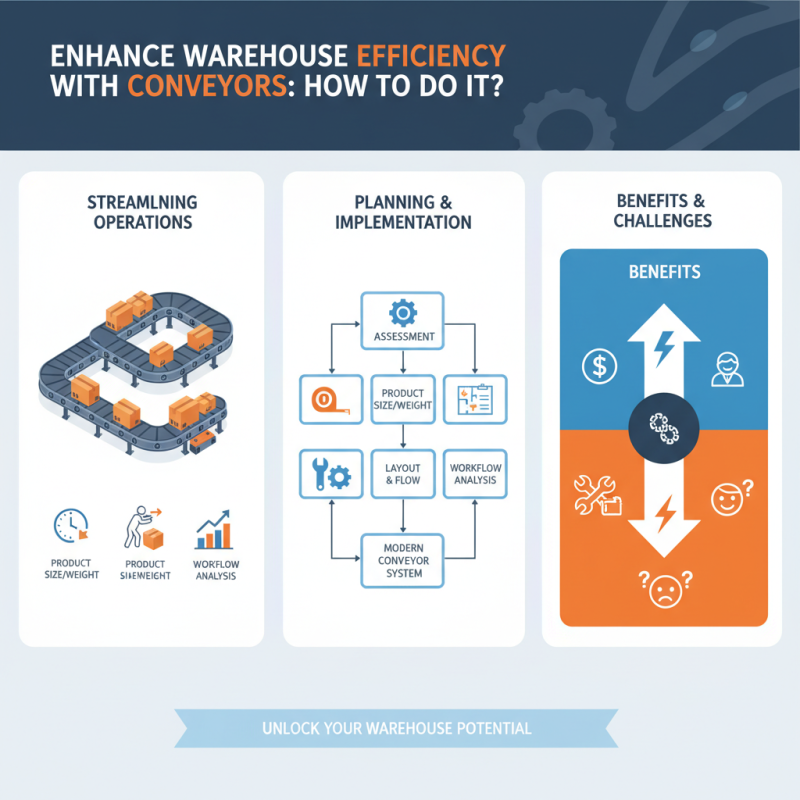
Enhance Warehouse Efficiency with Conveyors How to Do It?

Understanding Conveyor Systems and Their Role in Warehouse Efficiency

Conveyor systems play a pivotal role in enhancing warehouse efficiency. They automate the movement of goods, reducing manual labor and streamlining operations. According to a report by the Material Handling Industry of America, warehouses that implement conveyor systems can achieve productivity increases of up to 30%. This translates into significant time savings, as workers can focus on more value-added tasks rather than transporting items.

However, implementing conveyor systems is not without challenges. A common mistake is underestimating the importance of system design. Poorly designed layouts can lead to bottlenecks and hinder efficiency. Practical assessments indicate that around 25% of warehouses experience workflow interruptions due to ill-planned conveyor placements. Evaluating space and operational flow is crucial to avoid such issues.

Regular maintenance also proves vital for reliable performance. Systems can falter if not properly cared for, leading to unexpected downtimes. Industry studies show that maintenance costs can comprise 15% of the total system investment over its lifecycle. Recognizing and addressing these factors is crucial for maximizing the benefits of conveyor systems. By focusing on thoughtful design and maintenance, warehouses can significantly enhance operational efficiency and productivity.

Key Benefits of Implementing Conveyors in Supply Chain Operations

Implementing conveyors in supply chain operations can significantly enhance warehouse efficiency. According to a report by the Material Handling Industry Association (MHIA), automation can increase warehouse productivity by up to 30%. This is largely due to reduced reliance on manual labor. Workers can focus on value-added tasks while conveyors handle the heavy lifting and transportation of goods.

Conveyors also minimize error rates. A study published by the Warehousing Logistics International revealed that automated systems reduce picking errors by approximately 70%. This accuracy leads to improved customer satisfaction and reduced returns. Moreover, operational expenses can decrease as well. When goods move faster through the warehouse, the overall labor costs may drop by up to 25%.

However, it is essential to consider potential challenges. Integrating conveyors requires initial capital investment and ongoing maintenance. Not all facilities may have the infrastructure needed for effective conveyor systems. Regular assessments and employee training are crucial for maximizing system benefits. Balancing automation with manual operations can sometimes yield better results.

Analyzing Warehouse Workflow: How Conveyors Optimize Material Handling

In analyzing warehouse workflow, implementing conveyor systems significantly enhances material handling efficiency. According to a recent report from the Warehousing Efficiency Association, warehouses using automated conveyor systems can increase productivity by up to 30%. This boost arises from reducing manual handling and allowing for seamless movement of goods.

Conveyors streamline the sorting and distribution process. With a well-designed conveyor system, items are transported quickly to various sections of the warehouse. It minimizes delays caused by manual transport. Moreover, the use of conveyors helps to optimize space utilization. In crowded environments, vertical conveyors can save floor space while maximizing storage capacity.

However, not every facility may benefit equally. Overcoming resistance to change is essential. Workers might feel intimidated by automation and new technology. Training programs must address these concerns and provide necessary support. Without adequate training, inefficiencies can creep back into the workflow. Balancing automation with human oversight remains crucial for optimal performance.

Evaluating Cost Savings from Conveyor Use in Warehouse Settings

In warehouse environments, the use of conveyors can lead to significant cost savings. A study by the Warehousing Education and Research Council reported that warehouses implementing conveyor systems increase sorting accuracy by 30%. This reduction in errors not only enhances productivity but also minimizes costly returns and re-shipments.

Improving efficiency is vital. One tip for maximizing conveyor effectiveness is to assess the layout. An optimized layout reduces travel time for items, increasing overall throughput. Additionally, regular maintenance of conveyors ensures smooth operation, preventing costly downtime. According to a report, a well-maintained conveyor system can save warehouses up to 20% in labor costs.

Implementing conveyors can reduce operational costs, but challenges exist. Initial investment and integration into existing systems might seem daunting. Therefore, evaluating long-term benefits is crucial. Look for measurable outcomes after installation. Monitoring data, such as order fulfillment rates and employee productivity, can provide insights for continuous improvement.

Industry Case Studies: Successful Conveyor Integration in Warehouses

In recent warehouse operations, conveyor systems have proven to enhance efficiency significantly. A logistics firm integrated conveyors for sorting packages, streamlining their operations. This transformation reduced manual handling and improved order accuracy. Employees could focus on higher-value tasks, leading to greater job satisfaction and productivity.

Consider a case study involving an automotive parts warehouse. When conveyors were added, the flow of materials became seamless. The movement between different areas of the warehouse was faster. However, the initial setup posed challenges. Workers needed training to adapt to the new system. Some felt overwhelmed by the changes. It’s important to manage this transition carefully to avoid frustration.

A retail distribution center faced similar issues. Implementing conveyors improved product retrieval times. Yet, they experienced bottlenecks during peak seasons. They had to rethink their layout and staffing. Real-time monitoring of the system helped identify where delays occurred. This ongoing refinement shows that success isn't just about technology; it’s about people and processes working together.

Enhance Warehouse Efficiency with Conveyors How to Do It? - Industry Case Studies: Successful Conveyor Integration in Warehouses

Warehouse Area Conveyor Type Efficiency Improvement (%) Integration Time (weeks) Key Benefits
Receiving Belt Conveyor 30 4 Reduced labor, faster processing
Storage Roller Conveyor 25 6 Space optimization, improved safety
Picking Modular Conveyor 40 3 Increased order accuracy, reduced walk time
Packing Overhead Conveyor 20 5 Free floor space, smoother workflow
Shipping Screw Conveyor 35 2 Enhanced loading speed, improved safety

FAQS

: What are the main benefits of conveyor systems in warehouses?

: Conveyor systems automate item movement, lowering manual labor and improving productivity by up to 30%.

How can conveyor systems impact workflow in a warehouse?

Poorly designed conveyor layouts can create bottlenecks, causing around 25% of warehouses to face workflow interruptions.

Why is maintenance important for conveyor systems?

Without regular maintenance, conveyor systems can fail and lead to unexpected downtimes, which can be costly.

What percentage of total system investment can maintenance costs reach?

Maintenance costs can total about 15% of the overall investment in conveyor systems throughout their lifespan.

How can layout optimization affect conveyor performance?

An optimized layout reduces travel time, enhancing throughput and overall warehouse efficiency significantly.

What impact does conveyor usage have on sorting accuracy?

Implementing conveyor systems can increase sorting accuracy by 30%, reducing errors and minimizing costly returns.

What is a common mistake made when implementing conveyor systems?

Many underestimate the importance of system design, which can lead to disruptions in efficiency and workflow.

How can warehouses track the effectiveness of conveyor systems post-installation?

Monitoring order fulfillment rates and employee productivity can provide valuable insights into conveyor effectiveness.

What should warehouses prepare for when installing conveyor systems?

Initial investment and integration can be daunting, thus long-term benefits should be evaluated carefully.

How much labor cost can a well-maintained conveyor system save?

A well-maintained system can result in labor cost savings of up to 20%, enhancing overall profitability.

Conclusion

In modern supply chain operations, understanding conveyor systems is crucial for enhancing warehouse efficiency. Conveyors streamline material handling by automating the movement of goods, allowing for smoother workflows and reducing manual labor. Implementing these systems can lead to significant benefits, such as increased throughput, minimized errors, and improved safety.

To maximize cost savings, it's important to evaluate the specific needs of the warehouse environment and analyze how conveyors can optimize processes. Successful case studies demonstrate that proper integration of conveyor systems not only boosts productivity but also contributes to long-term economic efficiency. Ultimately, learning how to improve warehouse efficiency with conveyors can transform operational capabilities and drive success in supply chain management.

Aria

Aria

Aria is a dedicated marketing professional with a deep passion for innovative strategies and a keen understanding of our company's product offerings. With a wealth of experience in the industry, Aria excels at crafting engaging content that highlights the unique features and benefits of our......