As the logistics industry evolves, many small warehouse operators question, "are conveyor systems worth it for small warehouses?" By 2026, advancements in automation will reshape operations. Reports indicate that conveyor system efficiency can boost productivity by up to 30%. This is crucial for small warehouses operating with limited space and budgets.
Investing in conveyor systems may require upfront costs. However, consider the long-term benefits. A study from the Material Handling Industry of America shows that automated systems can reduce labor costs significantly. Still, small warehouse owners must analyze their specific needs. Not every warehouse will see a return on investment.
Industry professionals emphasize the importance of tailored solutions. A poorly implemented conveyor system can lead to inefficiencies. It's essential to weigh the potential gains against the initial expenses. As the conversation about automation continues, small businesses must ask themselves: are conveyor systems truly the right choice?
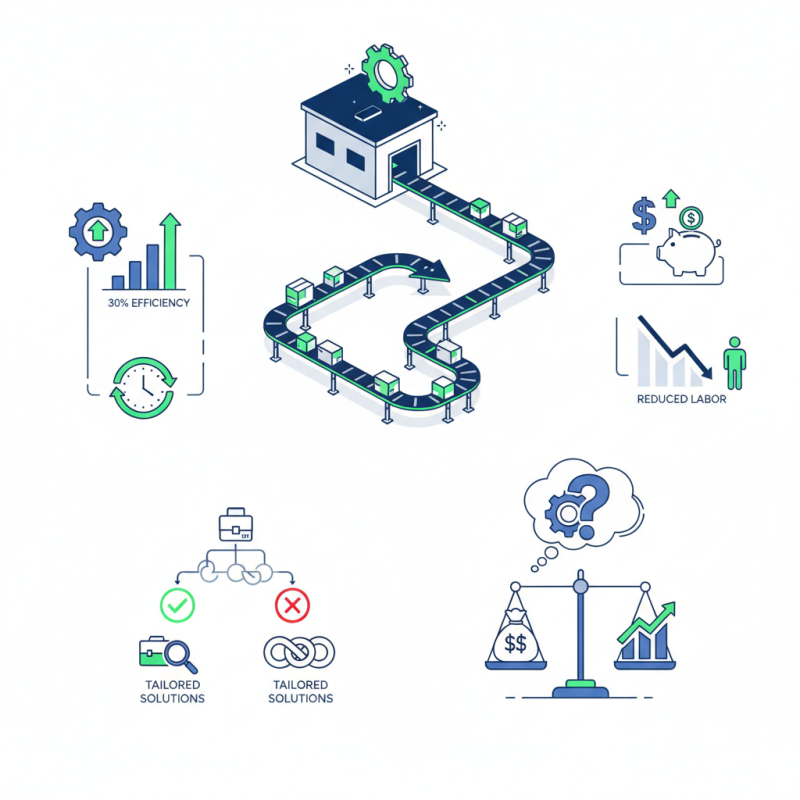
The adoption of conveyor systems in small warehouses is gaining traction, especially in 2026. Recent industry reports indicate that around 45% of small warehouse operations have started using automated solutions. Conveyor systems significantly enhance efficiency, reducing manual labor costs by approximately 30%. This is crucial for small businesses facing tight profit margins.
Moreover, conveyor systems streamline sorting and packing processes. Studies show that these systems can increase throughput by up to 50%. This agility is essential in today’s fast-paced market. However, the initial investment can be daunting for some small warehouse owners. Decisions should carefully consider both short-term costs and long-term gains.
A common concern is the maintenance of these systems. Over 20% of small warehouse owners report challenges regarding equipment reliability. Downtime can lead to delays and unsatisfied customers. It's vital to assess whether the long-term benefits outweigh these potential drawbacks. Investing in training and regular maintenance can mitigate these risks.
: Conveyor systems enhance efficiency and can reduce manual labor costs by about 30%. They improve sorting and packing processes.
Studies indicate that conveyor systems can boost throughput by up to 50%. This is important for fast-paced markets.
They should evaluate initial costs, specific needs, and long-term gains. Decisions require careful consideration of potential benefits.
Maintenance and equipment reliability are common concerns. Over 20% report difficulties that can disrupt operations and lead to downtime.
The return on investment can differ greatly. Small warehouses must analyze their existing workflows to determine benefits.
Not necessarily. While they boost order picking speeds by up to 30%, manual operations can offer flexibility for some businesses.
They should assess order volume, potential costs, and training needs. Each warehouse’s situation is unique and requires reflection.
Proper training reduces errors with new technology. A streamlined onboarding process is essential for effective implementation.
Monitoring performance helps identify strengths and weaknesses in both types of systems. Strategic changes can enhance overall productivity.
If order volume is low, manual operation may suffice. It’s important to match processes with actual needs.
In exploring whether "are conveyor systems worth it for small warehouses" in 2026, the article outlines several key aspects that highlight the benefits of implementing such systems. Conveyor systems can significantly enhance efficiency by streamlining operations, reducing manual labor, and minimizing product handling errors. The cost analysis indicates that while the initial investment may be considerable, the long-term savings in labor costs and increased productivity often justify the expense.
Moreover, a comparative efficiency assessment reveals that conveyor systems consistently outperform manual operations in speed and accuracy, leading to greater overall throughput. Future trends in warehouse automation suggest that technological advances will only further improve the functionality of conveyor systems, making them an increasingly attractive option for small warehouses. Case studies showcasing successful implementations illustrate the positive impact these systems can have, reinforcing the argument that, indeed, conveyor systems are worth it for small warehouses looking to thrive in an evolving market.

 Maith Conveyor