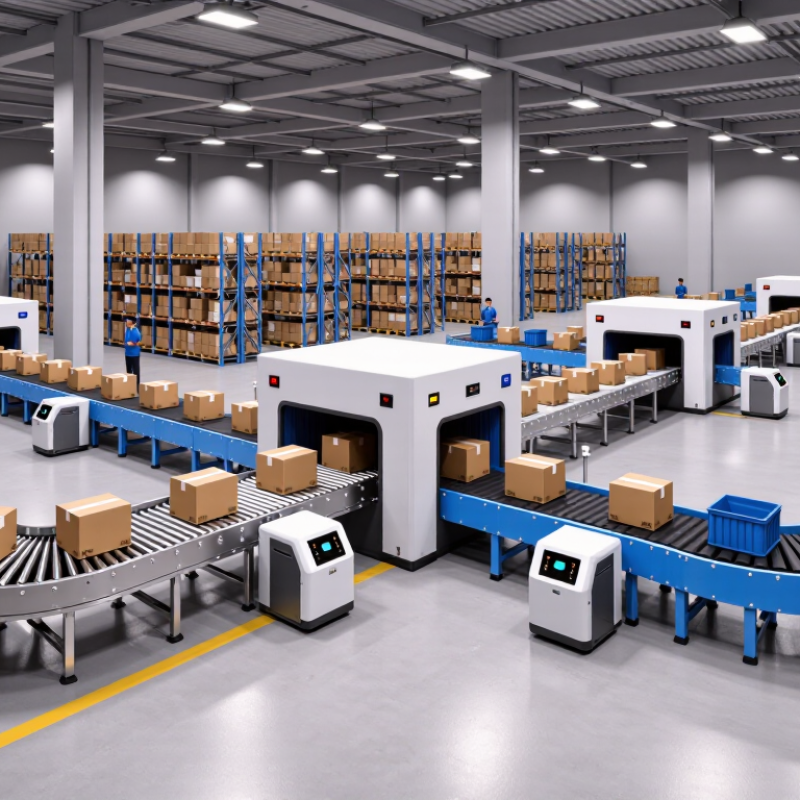
Conveyor systems are a practical part of many Chinese warehouses and manufacturing facilities. They move cartons, totes, and components between work areas with less repeated lifting. A roller line may carry sealed boxes toward a packing station, while a belt conveyor can handle smaller items that need steady support. The right setup depends on the products, available floor space, and daily operating demands. It is not simply a matter of choosing the fastest machine.
So, what is the purpose of conveyor systems in warehouses? Their main role is to create a predictable path for materials, helping teams transfer goods between receiving, storage, sorting, and dispatch. Sensors, controls, and safety stops can support smoother movement when they are selected and maintained appropriately. Yet conveyors do not solve every workflow problem. Poor layouts can cause congestion, and unsuitable equipment may damage fragile goods or waste energy. Small details matter.
China’s conveyor market includes manufacturers offering systems for different capacities and applications. Buyers should examine load limits, belt or roller materials, control options, maintenance access, and the supplier’s technical support. Ask how the equipment performs with your actual cartons, not only with a polished demonstration sample. That question can reveal gaps early. A reliable system should fit the operation, leave room for safe access, and allow staff to respond when a line stops. Even a well-designed conveyor needs regular inspection and clear operating procedures. The most useful choice is often the one that fits the real workflow—not the one with the most impressive specification sheet.
China Top Conveyor Systems: What Is Their Purpose?
What Conveyor Systems Are and How They Work
A conveyor system moves materials between points along a planned route. It can carry cartons, components, or bulk goods across a factory floor. Common systems use belts, rollers, chains, or vibrating surfaces. The right design depends on the material, distance, speed, and working environment.
A motor often drives the belt or chain, while rollers support the load and reduce friction. Sensors and controls can regulate speed, detect jams, or coordinate transfers between stations. For example, a belt may carry a box from a packing table to a loading area. Guards, emergency stops, and routine inspections help keep operation predictable. In practice, even a small alignment problem can cause uneven wear. That detail is easy to overlook.
Tips: Match the conveyor to the load’s weight and shape. Check belt tension, roller condition, and emergency stops regularly. Keep transfer points clear, since loose packaging can snag. Measure the route before installation, including turns and height changes. A system that looks efficient on paper may need adjustment once operators use it. Small details matter.
| Conveyor System Type | Main Purpose | How It Works | Common Materials or Items | Typical Applications |
|---|---|---|---|---|
| Belt Conveyor | Moves items continuously along a fixed route, including horizontally or on a suitable incline. | A motor drives a pulley that moves a continuous belt. Idlers or a sliding bed support the belt and its load. | Cartons, parcels, packaged goods, bulk solids, and components | Warehousing, manufacturing, mining, agriculture, and distribution |
| Roller Conveyor | Transfers items with firm, flat bases between work areas or along a packing and sorting line. | Items travel over rollers. Gravity moves loads on sloped sections; powered rollers move them on level sections. | Boxes, totes, trays, and pallets | Packaging lines, warehouses, shipping areas, and assembly operations |
| Chain Conveyor | Moves heavy, bulky, or hot loads that require a durable conveying surface or attachments. | One or more motor-driven chains circulate around sprockets. Attachments or slats carry or support the load. | Pallets, containers, fixtures, and heavy components | Automotive production, pallet handling, and heavy manufacturing |
| Screw Conveyor | Moves loose bulk material through a contained trough or tube. | A rotating helical screw pushes material along the conveyor housing. | Grain, flour, powders, pellets, and some damp materials | Food processing, agriculture, wastewater treatment, and bulk-material handling |
| Bucket Elevator | Raises bulk material vertically or at a steep angle to a higher processing or storage point. | Buckets attached to a belt or chain collect material at the bottom, carry it upward, and discharge it near the top. | Grain, seed, fertilizer, minerals, and other free-flowing bulk materials | Grain storage, mills, processing plants, and bulk-material facilities |
| Vibrating Conveyor | Feeds, distributes, or transfers bulk materials using controlled vibration. | A vibrating drive moves a trough in a repeated motion that advances material along its surface. | Small parts, aggregates, powders, and food products | Screening, feeding, sorting, and processing operations |
| Pneumatic Conveyor | Transfers suitable bulk materials through enclosed pipelines, often where a closed route is useful. | Airflow carries material through a pipe. Systems may use positive pressure or vacuum, depending on the design. | Powders, granules, pellets, and other compatible dry bulk materials | Food, chemical, plastics, and pharmaceutical processing |
| Overhead Conveyor | Moves suspended items while keeping floor space available for people, equipment, or other processes. | Carriers, hooks, or trolleys travel along an overhead track, driven by a chain or another conveying mechanism. | Garments, vehicle components, and items carried on hooks or fixtures | Assembly lines, garment handling, painting, and finishing operations |
Purpose at a glance: Conveyor systems provide a controlled way to move materials or products between locations. The appropriate system depends on the load, route, operating conditions, and process requirements.
It moves products steadily between work areas. This reduces manual carrying, walking time, and handling damage. The system should fit the workflow, not merely look advanced.
Automotive factories move metal parts between assembly stations. Warehouses transport cartons between receiving, storage, and packing areas. Agriculture, food processing, mining, and construction also use them.
Roller conveyors carry parts between assembly stations. Operators can adjust speed, spacing, and loading height. Small adjustments may prevent awkward lifting.
Stainless steel frames and smooth surfaces support regular cleaning. They also reduce places where food residue can collect. Hygiene requirements should be checked before installation.
Check product weight, size, surface, stability, moisture, and temperature. Measure the complete route, including curves, transfers, and cleaning access. A conveyor for dry cartons may fail with oily materials.
Excessive speed can create jams near packing stations. Incorrect loading height may increase worker strain. Speed matters. The fastest setting is not always the best setting.
Safety guards and emergency stop devices should be planned from the beginning. Operators also need practical training. Dusty sites require extra protection around moving parts and motors.
A short trial can reveal slipping, noise, belt tracking, or unstable cartons. It may also expose awkward operator movement. Drawings can look complete, but real production behaves differently.
Review motor data, maintenance schedules, spare-part availability, and installation drawings. Check cleaning access and expected service intervals. A cheap system can become expensive when maintenance is difficult.
Yes, it may work mechanically but disrupt the workflow. Poor access, incomplete documents, or awkward transfers can slow operators. That detail is easy to miss.
Conveyor systems are mechanical solutions that move materials from one point to another along a planned route, using belts, rollers, chains, or other carrying mechanisms. In industry, they help streamline production, reduce manual handling, maintain a steady flow of goods, and support safer, more organized operations. Understanding what is the purpose of conveyor systems in warehouses helps explain how they can speed up the movement of products between receiving, storage, packing, and shipping areas.
Common conveyor types used in China include belt, roller, chain, and modular systems, each suited to different loads, layouts, and operating conditions. These systems support industries such as manufacturing, logistics, food processing, and mining by adapting material movement to their particular needs. Choosing the right system involves considering the material being conveyed, required capacity and speed, available space, working environment, maintenance needs, and overall cost. A well-matched conveyor can improve efficiency while remaining reliable and practical over time.

 Maith Conveyor